The Heart Behind the Classroom: Why Classroom Aides and Support Staff Matter

Some of the most meaningful progress at the CCHAT Center happens in the everyday moments, and the person who notices it first is often a classroom aide working right beside the child. Dominique Smith, Instructional Aide/SLPA, remembers one of those moments well:
“I remember having this special girl in the Toddler Class who used to come in kicking and screaming. She didn't acknowledge any of the staff when she walked in. She had very minimal language as well. Five years later, I am taking her to speech, and she is having a conversation with clear articulation. It made me so emotional to see how far she has come.”

Dominique understands that journey from both sides. She started at CCHAT in the Toddler Class when she was about 18 months old, and today she helps a new generation of students find their voices.
“This school held a special place in my heart when I was a student,” she shared. “I felt the love and empathy from the teachers and speech pathologists.”
Her story points to something families see again and again at CCHAT: a child's growth never rests on one person. Alongside teachers of the deaf, speech-language pathologists, and audiologists, CCHAT's instructional aides and speech-language pathology assistants (SLPAs) carry lessons into every corner of the school day. Here, in their own words, is why that support matters so much for children who are deaf and hard of hearing.
What Does a Classroom Aide Do at CCHAT?
A classroom aide at CCHAT, known as an Instructional Aide, works side by side with the classroom teacher to reinforce lessons, support students one-on-one and in small groups, and help each child work toward the goals in their Individualized Education Program(IEP) or Individualized Family Service Plan(IFSP).
From preparing materials before the first lesson to tracking each child’s progress, aides help keep the whole day running. They follow the teacher’s lesson plans, keep the classroom safe and supportive, help students use computers and audio-visual equipment, and partner closely with co-workers, students, and parents. When their licensure and credentials allow, aides can even step in for the supervising teacher or the speech-language pathologist.
In a listening and spoken language classroom, the role reaches even further. A past CCHAT spotlight on Instructional Aides noted that their work can include hearing assistive technology troubleshooting and overseeing recess and outdoor play, two places where listening and talking happen naturally.
Several members of CCHAT's support staff also serve as SLPAs, supporting children's speech and language goals. Gabi Pearlman, SLPA, has been part of CCHAT for six years. Dominique has been with CCHAT for seven years, and Olivia D’Albert, Instructional Aide, joined the team a year and a half ago.
The Work Families Don't Always See
Much of what support staff does happens in the small spaces between lessons. Olivia describes it this way:

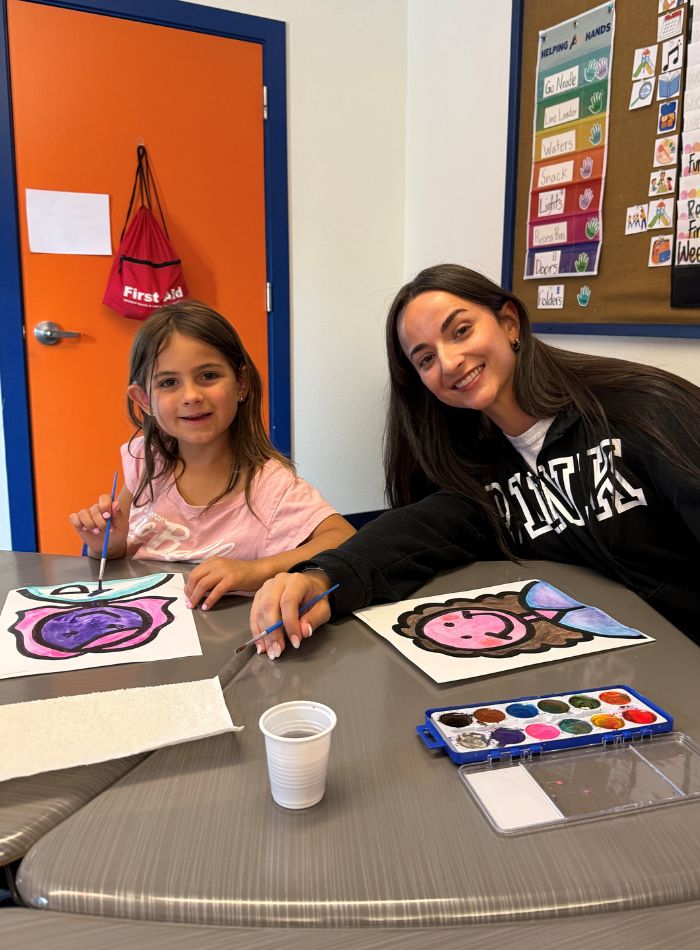
“People outside the classroom often don’t see that students at CCHAT don’t just learn with traditional teaching methods. We utilize the natural environment as an opportunity to teach a variety of skills, including spoken language and social skills. This happens during recess, music, and even during simple tasks.”
For Dominique, it is the ability to respond in the moment. “They don't get to see at times how quickly I can catch certain behaviors and find the solution that meets that need,” she said.
For Gabi, it is knowing every child deeply:
“The nuances of my student's likes and behaviors, such as knowing what their favorite toys or snacks are to elicit more language, knowing how long it takes them to start participating in the mornings, knowing what their favorite songs are, and just having meaningful connections with them!”
How Does Support Staff Build Listening and Spoken Language Throughout the Day?
Support staff treat every part of the day as a chance to listen and talk, not only the scheduled lessons. Olivia describes the simple habits behind it: “We narrate actions, label items, and model spoken language which is encouraging for students.”
Confidence is a big part of the equation. Gabi's go-to strategies are “encouraging communication, being patient, providing choices, encouraging social interactions, and positive reinforcement for the small efforts!” Olivia agrees that celebrating effort matters:
“Knowing confidence is key, we highly praise students for displaying their language skills. Whether that be singing a song or getting a shout-out, we love to praise our students for doing a great job.”

Growth That Goes Beyond Academics
Ask CCHAT's support staff what growth looks like, and their answers rarely begin with test scores. “Growth to me looks like increased confidence in social skills as well as the ability to express needs and wants in more detail,” Olivia said. She has watched it happen firsthand:
“A student who wasn’t previously articulating words began calling peers and teachers by their name. This student now congratulates other students, points out when a peer isn’t present, and asks for items using full sentences.”

Gabi sees growth in how children care for their own hearing technology:
“Growth can be in self-advocacy with their equipment. When our students are able to tell you that their hearing aid or cochlear implant battery died, it is the best feeling knowing they are starting to learn how to care for this lifelong device.” She also sees it in participation. “Sometimes I have students who don't make a PEEP all year, and then the following year they are just eager to participate.” Working with toddlers, she gets to watch that progress unfold over years: “Going from teaching them short phrases to request their needs or wants to then seeing their speech and language blossom to full sentences is what inspires me every day.”
Why School Support Staff Make Teamwork Possible
Strong school support staff help an entire team stay focused on each child's needs. Gabi put it simply:
“No one person can meet every child's needs on their own. Sharing knowledge, communicating regularly about children's hearing accessibility is important, and working as a team is ultimately how we help students reach their full communication potential.”
That trust runs deep. Gabi describes a team so in sync that coworkers can practically finish each other's sentences during the role-playing they do together. “I believe in my colleagues and their expertise, and I know how much love and nurture we pour into our students and families,” she said.
The teamwork continues even as students move on. Gabi explained that CCHAT usually holds an in-service where a CCHAT teacher goes with the family to the child's new school to meet the new teachers, explain the student's hearing levels, and review how the hearing assistive technology (HAT) system works and should be used, and the student's accommodations.
How Families Can Carry the Classroom Home
Our support staff is quick to remind families that they are part of the team, too. “The carryover of what is happening in the classroom to home is so important for encouraging conversations with the child,” Gabi said. “Working together creates consistency between home and school and helps children become more confident.”
A few ideas from CCHAT's support staff:
- Stay connected with the classroom. “Families can ensure consistency at home by communicating with teachers about current goals and lessons,” Olivia said.
- Talk through everyday routines. Gabi suggests, “Narrating what you are doing during simple tasks such as brushing your teeth or even a quick trip to the grocery store. There is power in language, and there is language everywhere!!!”
- Invite your child into conversation. Olivia encourages families to “utilize opportunities in their natural day-to-day life to model language and involve their children in conversations.”

And for families who feel overwhelmed at the start, Dominique offers this reassurance:
“To reassure that it's okay to feel overwhelmed but to know they have teachers and SLPs that can be of support and walk the process with them. The journey isn't linear, and there will be difficult moments, but it's how they show up for the child that matters significantly.”
How CCHAT Helps
At CCHAT, our support staff is woven into every stage of a child's education. In CCHAT's specialized early intervention programs, students in the Toddler, Preschool, and Pre-K programs receive preschool education paired with daily speech, language, and listening therapy, with aides and SLPAs helping reinforce that work throughout the day. For families of the youngest children, CCHAT also offers the Baby & Me Program and newborn hearing screenings and diagnostic services
For Dominique, the mission is personal. “I am able to see how it has significantly helped me to communicate with my peers, which is why I want it for others,” she said. You can read more about her journey in her CCHAT alumni story.
See the Team in Action
Behind every first word, every full sentence, and every child who proudly announces that their battery died, there is a team that noticed, encouraged, and celebrated. CCHAT's instructional aides and SLPAs are a big part of that team, and families feel the difference every day.
If you would like to see how CCHAT's teachers, specialists, and support staff work together for children who are deaf and hard of hearing, schedule a tour through CCHAT's contact page or call (916) 361-7290.
Frequently Asked Questions
What does a classroom aide do?
At CCHAT, a classroom aide (Instructional Aide) works with the classroom teacher to reinforce lessons, support students individually or in small groups, prepare materials, and help children work toward their IEP or IFSP goals.
What is an SLPA?
An SLPA is a speech-language pathology assistant. At CCHAT, SLPAs such as Gabi Pearlman and Dominique Smith help children build speech and language skills as part of a team that includes speech-language pathologists.
How can families support classroom learning at home?
Stay in touch with your child's teachers about current goals, and narrate everyday routines, like brushing teeth or a trip to the grocery store, so your child has more chances to hear and use language.






From Silence to a Sound Solution for Children With Hearing Loss. How CCHAT Prepares Them for Life.
Recent Posts
Topics
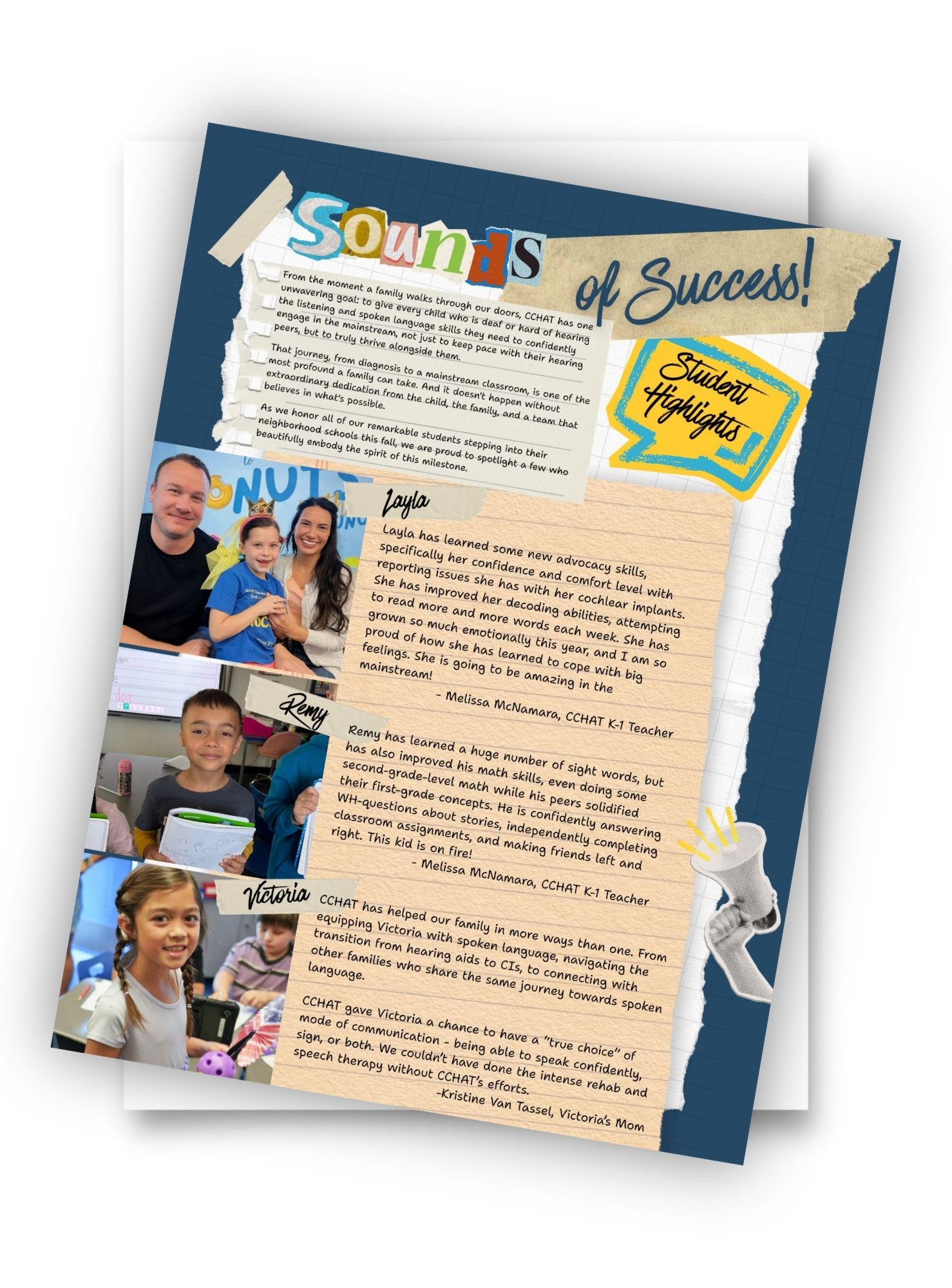
Sounds of Success
Sign Up for Our Newsletter!