Essential Strategies for Ensuring Young Children Wear Hearing Aids and Cochlear Implants
.avif)
Keeping hearing aids and cochlear implants on young children provides continued access to sound, and thus, it is imperative to develop strategies that ensure uninterrupted use. Children who are deaf and hard of hearing (DHH) should be wearing their listening devices for all waking hours. However, with kids of any age, keeping devices on can be a challenge for various reasons. Here are some ideas you can try if your child’s hearing aid or cochlear implant keeps falling off.
Understanding the Importance of Hearing Devices for DHH Children
Explain Why Consistent Use Matters
Some children will be receptive to hearing about the value of their listening devices. Talk about why kids with hearing loss need to wear them and what they are missing out on if they do not. If you can explain the importance in a clear way, your child will soon recognize that their listening devices are a vital part of their daily life. Part of this process requires you to be diligent about your child wearing their hearing aids and cochlear implants. If wearing hearing equipment is expected, your child will understand its importance.
Fostering a Positive Attitude Towards Hearing Aids and Cochlear Implants
Encouraging Kids to Embrace Their Hearing Devices
Wearing listening devices is important, but it should not be seen as a chore. Try to stay positive with children who are deaf or hard of hearing (DHH) as they learn to wear hearing aids and cochlear implants. Be sure to praise them when they put on their own listening devices or leave them in for extended periods. Initially, a reward system can be a valuable tool for incentivizing the consistent use of hearing devices until it becomes second nature.
Building a Daily Routine for Wearing Hearing Devices
Integrating Listening Devices into Your Child’s Day
Children find comfort in a daily, recognizable routine. Incorporate putting on listening devices into your morning schedule right next to getting dressed, brushing teeth, and having breakfast. At night, make sure taking off listening devices falls in line after brushing teeth and a bedtime story. The repeatable pattern of a daily routine will help children with hearing loss feel at ease with their devices and recognize their importance.
Utilizing Visual Aids to Teach Device Usage
How Picture Charts Can Help Children Learn
Many children are visual learners. As part of your routine, use a picture chart that details the process of installing listening devices. This can also be used for affixing hearing-assistive technology receivers. Take pictures of your child putting on their devices and receivers, print them out, and use the visual cues to prompt them in the future.
Incorporating Fun Distractions During Device Application
Making the Process Enjoyable for Young Kids
When trying to encourage children to wear their hearing aids and cochlear implants, the initial action of putting them on can be the most challenging part. Using distractions can keep children busy during this process. Sing their favorite song while you are putting them on, or give them a toy or activity to keep their hands occupied.
The Importance of Regular Audiology Follow-Ups
Ensuring Optimal Device Function and Comfort
Children may be trying to remove their hearing aids and cochlear implants because the devices are not properly mapped. Listening devices that produce distorted or intermittent sounds can be aggravating for young children, causing them to remove their hearing aids and cochlear implants. Be sure to keep up with audiology appointments so the devices are correctly programmed and are providing optimal sound.
Using Headbands and Accessories to Secure Hearing Devices
Discovering Solutions to Keep Devices in Place
Sometimes, the best strategy is to use a headband that keeps hearing aids or cochlear implants in place to prevent them from falling off. A variety of headbands, some designed specifically for listening devices, can be used. This will ensure that technology remains on children until they are comfortable with securing it themselves. Headbands are also valuable during recreational activities, such as sports, when devices may be more prone to falling off. Look for headbands that secure hearing aids and cochlear implants in place, but do not block microphones or prevent sound from entering the device. Similar products for securing technology are cochlear implant “huggies,” which loop around the ear to ensure the device stays in place.
Staying Positive and Finding Tailored Strategies
Encouraging Consistency Through Support and Adaptation
There may be times when this issue feels insurmountable. However, by following these helpful tips and maintaining a positive attitude, your child will learn that their hearing devices are essential and must be worn consistently throughout the day. CCHAT aims to help parents navigate every step of their child's journey with hearing loss. Consider connecting via email with a current CCHAT parent for additional tips and insights. For more information, visit our Parent Support and Resources page.

%20(1).avif)




From Silence to a Sound Solution for Children With Hearing Loss. How CCHAT Prepares Them for Life.
Recent Posts
Topics
Sounds of Success
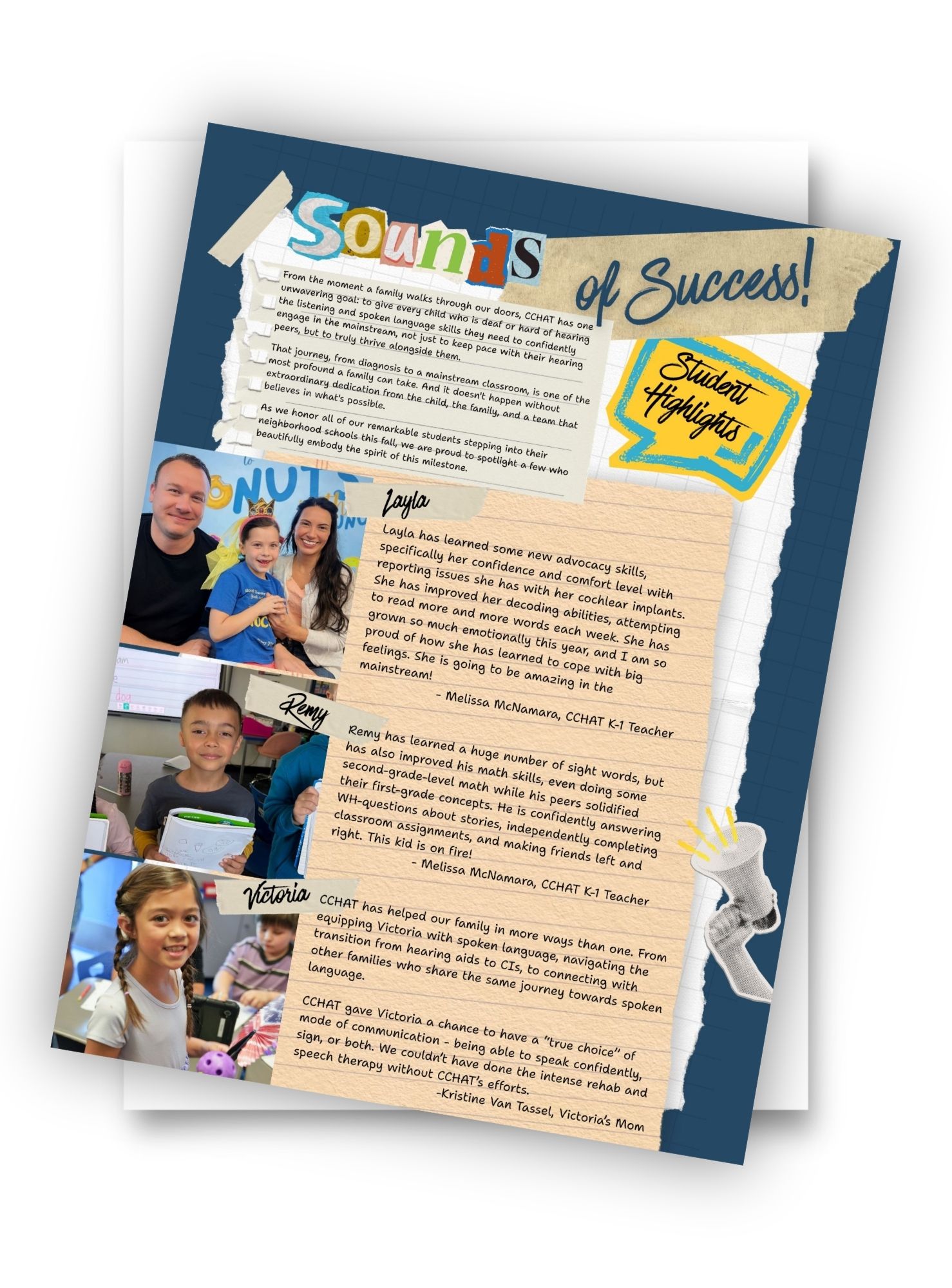
Sign Up for Our Newsletter!