Supporting Siblings of Children Who Are Deaf and Hard of Hearing

When a child has hearing loss, family dynamics play a crucial role in shaping their educational and emotional outcomes. For children who are deaf and hard of hearing, one of the most important, and often overlooked, relationships is the one with their siblings. Sibling relationships are some of the strongest and longest relationships that your children may have, and can be a great support for them as they go through life. About 71% of DHH children with siblings are shown to have hearing brothers and sisters.1 While much attention is often focused on the child who is deaf and hard of hearing, siblings also play an important role in family life and may benefit from support as they navigate their own experiences.
Why Sibling Relationships Matter for Children
Understanding the Value of Sibling Connection for Deaf and Hard-of-Hearing Children
Sibling relationships are shown to be a great source of learning as hearing siblings can often demonstrate how to interact with others, how to interpret and respond to social cues, how to resolve conflicts and interpersonal problems, how to cope with difficult emotions, and how to develop social understanding and skills1. Studies show that a positive and supportive sibling relationship has been found to be associated with social and emotional development, including cognitive, behavioral, and educational outcomes1. Many DHH children see their siblings as role models and imitate their behaviors, styles of communication, and mannerisms as they navigate their everyday lives. Siblings are also a significant source of love, encouragement, and support for DHH children as they experience different challenges throughout life.
Common Challenges for Siblings
Recognizing the Experiences and Emotions Siblings Face

Although many siblings report that having a sibling who is deaf and hard of hearing has helped them develop skills such as empathy, understanding, insight, responsibility, and patience, there are also challenges they may experience. Studies show that some siblings may experience limited access to caregiver attention, causing them to feel overshadowed or isolated within their family2. Unfortunately, this can lead to feelings of resentment or emotional distance from their siblings. Siblings may also feel pressured to mature more quickly by taking on caregiving responsibility or modeling behavior for their siblings2. Due to the needs of their DHH sibling, they may feel internalized pressure to minimize their own needs to reduce the burden on their parents2. Some studies show that siblings may feel guilty that they are “normal,” while their sibling may face more challenges3. Social stigma is another worry they may experience as they may have to cope with the reactions their peers may have towards their siblings having hearing loss4. In social settings, siblings may feel responsible for helping their brother or sister communicate with peers, which can create a sense of additional responsibility and pressure4.
Supporting Siblings in Everyday Life
Ways to Foster Positive Sibling Relationships
As a parent, there are ways you can support a healthy relationship between your children. Siblings need to know that all their feelings are valid, as they may feel a variety of emotions throughout their sibling’s DHH journey. Creating opportunities for siblings to express their thoughts and emotions without judgment can help them feel heard and understood within their family1.

One effective strategy is to practice positive, open communication. Siblings of deaf and hard-of-hearing children can be confused about the special attention, services, or accommodations that their sibling receives, which may lead to feelings of unfairness and resentment. By discussing the reasoning behind these services, parents can help siblings better understand their brother’s or sister’s unique needs and reduce their feelings of confusion or unfairness.
Furthermore, providing age-appropriate information about their sibling’s hearing loss can help them better understand their sibling’s needs and encourage them to ask questions and show greater empathy. This can help siblings build a stronger understanding of each other and strengthen their emotional connection and respect.
Another useful strategy is finding activities that both siblings enjoy and can participate in together. Shared activities and occupations such as games, sports, creative activities, or daily routines can promote bonding, cooperation, and positive shared experiences.
It’s important for siblings not to feel neglected within their family, so organizing regular parent dates or activities for them to engage in with parents is another way to prevent jealousy or resentment. This can help improve family dynamics by supporting positive interactions and emotional support, leading to a more positive view of their siblings.
Supporting the Whole Family When a Child Has Hearing Loss
Creating a Supportive Environment for Every Family Member
Supporting siblings of DHH children is an important part of supporting the entire family. When siblings feel informed, included, and valued, they are more likely to develop positive relationships with their brother or sister and contribute to a supportive home environment.

Remember that every family’s journey is different. There is no perfect way to balance the needs of multiple children, and challenges are a normal part of every family’s life. Fostering open communication and opportunities to connect ensures that each member of the family feels seen and supported.
Sibling relationships often last a lifetime and can become one of the most meaningful sources of support for children who are deaf and hard of hearing. By nurturing these relationships and acknowledging the experiences of all children in the family, parents can help create a strong foundation of respect, understanding, and resilience that extends well into adulthood.
At CCHAT Sacramento, we believe that supporting the whole family — including hearing siblings — is part of helping every child who is deaf or hard of hearing reach their full potential.
Additional resources for families and siblings include:
- Aussie Deaf Kids (https://www.aussiedeafkids.org.au/family-life/family-friends/siblings/)
- Supporting siblings of children who are deaf or hard of hearing Webinar (https://www.aussiedeafkids.org.au/learn/supporting-siblings-of-children-who-are-deaf-or-hard-of-hearing/)
- Hands & Voices (https://www.handsandvoices.org/comcon/articles/siblings.htm)
- National Deaf Children’s Society (https://www.ndcs.org.uk/advice-and-support/all-advice-and-support-topics/raising-deaf-child/building-strong-support-network-you-and-your-family)
- Me and my deaf brother or sister: For hearing siblings aged six and up Book (https://ndcs-bookshop.myshopify.com/products/me-and-my-deaf-brother-or-sister-for-hearing-siblings-aged-six-and-up)

Written by:
Joelle Barth, OTD/S, j_pahkim@u.pacific.edu
Joelle is a third-year occupational therapy doctoral student at the University of the Pacific. She is currently in her last semester and completing her capstone project at CCHAT Center. Her work focuses on supporting and educating parents of children diagnosed deaf and hard of hearing by creating accessible resources for connection, information, and emotional support. Her professional interests include pediatric occupational therapy, mental health, and community-based support.

References
- Eichengreen, A., & Zaidman-Zait, A. (2019). Relationships among deaf/hard-of-hearing siblings: Developing a sense of self. The Journal of Deaf Studies and Deaf Education, 25(1), 43–54. https://doi.org/10.1093/deafed/enz038
- Veldhorst, C., Luijmes, A., Kef, S., Vervloed, M. P., & Steenbergen, B. (2023). Scoping review: Quality of life of siblings of children who are deaf and hard of hearing, have a vision or motor impairment. Frontiers in Rehabilitation Sciences, 4. https://doi.org/10.3389/fresc.2023.1227698
- Raghuraman, R. S. (2008). The emotional well-being of older siblings of children who are deaf or hard of hearing and older siblings of children with typical hearing. The Volta Review, 108(1), 5–35. https://doi.org/10.17955/tvr.108.1.591
- Nadya, A., Syaifudin, A. A., & Tuerah, K. Y. (2025). Identifying the need for counseling support for hearing siblings of deaf individuals: Evidence from a case study. Journal of Education and Counseling (JECO), 75–83. https://doi.org/10.32627/jeco.v5i2.1453

%20(1).png)


From Silence to a Sound Solution for Children With Hearing Loss. How CCHAT Prepares Them for Life.
Recent Posts
Topics
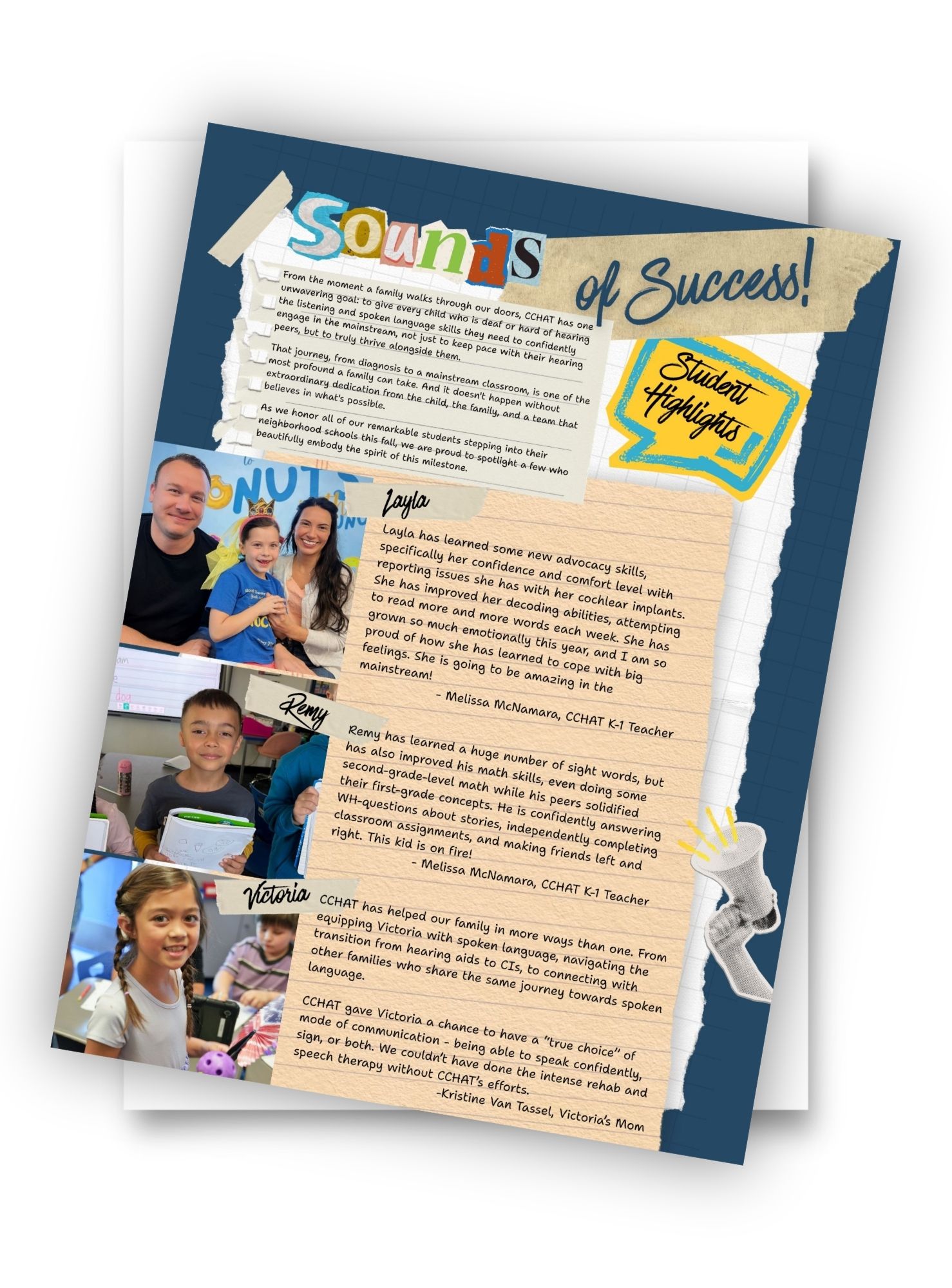
Sounds of Success
Sign Up for Our Newsletter!